

Introduction
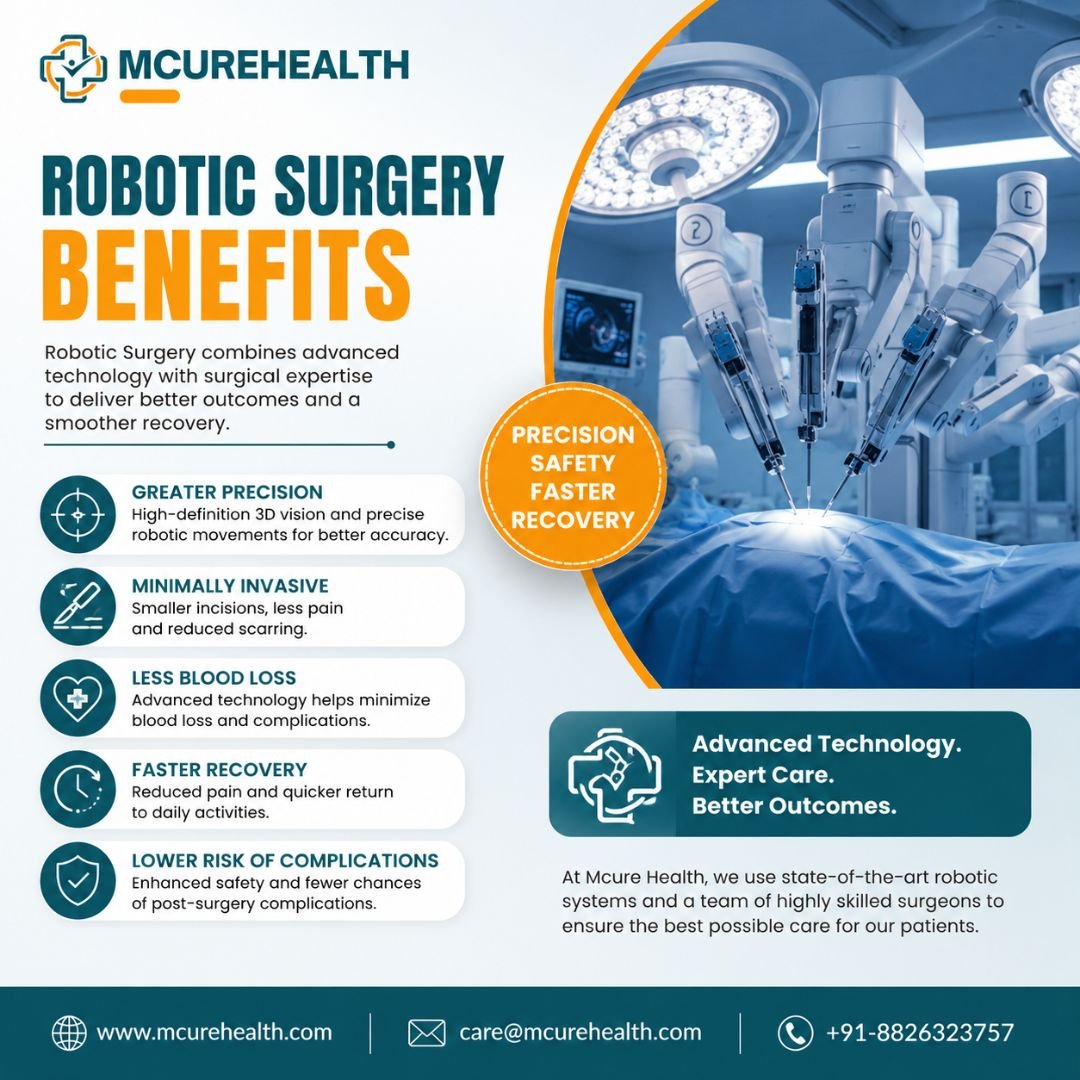
Medical technology has transformed the way complex surgical procedures are performed. One of the most significant advancements in modern healthcare is robotic surgery, also known as robot-assisted surgery. By combining a surgeon’s expertise with advanced robotic technology, these procedures can provide greater precision, enhanced visualization, and improved control during many minimally invasive operations.
For patients, robotic surgery can offer several potential advantages, including smaller incisions, less postoperative pain, reduced blood loss, shorter hospital stays, and faster recovery. However, robotic surgery is not suitable for every patient or every procedure. The most appropriate surgical approach depends on the patient’s medical condition, anatomy, procedure required, and the surgeon’s assessment.
Mcure Health helps patients, including international patients, access advanced surgical care through experienced specialists and leading hospitals in India.
What Is Robotic Surgery?
Robotic surgery is a type of minimally invasive surgery in which a trained surgeon controls specialized robotic instruments from a console. The robotic system does not independently perform the operation. Instead, the surgeon controls the instruments and guides every surgical movement.
Modern robotic systems commonly provide a magnified, high-definition, three-dimensional view of the surgical area. The instruments are designed to provide precise movements and flexibility within the body, which can be particularly useful for delicate or complex procedures.
Depending on the medical condition, robotic-assisted surgery may be used in specialties such as urology, gynecology, general surgery, gastrointestinal surgery, thoracic surgery, oncology, and orthopedics.
Top Benefits of Robotic Surgery in India
1. Greater Surgical Precision
One of the key benefits of robotic surgery is the high level of precision it can provide. Robotic instruments allow surgeons to make controlled and highly precise movements during surgery.
This can be especially valuable when operating around delicate structures or in areas that are difficult to access through traditional surgical techniques.
The surgeon remains fully responsible for the procedure while using the robotic system as an advanced surgical tool.
2. Enhanced 3D Visualization
Robotic surgical systems can provide surgeons with a magnified, high-definition, three-dimensional view of the operating area.
Improved visualization can help surgeons identify important anatomical structures more clearly and perform intricate surgical steps with greater control.
3. Smaller Incisions
Many robotic procedures are performed through small incisions rather than the larger incision required for some traditional open surgeries.
Smaller incisions can mean less disruption to surrounding tissues and may contribute to reduced postoperative discomfort, smaller scars, and easier recovery. Minimally invasive surgery is generally associated with less pain and shorter hospital stays compared with many open procedures.
4. Less Blood Loss
Because robotic surgery is frequently performed using minimally invasive techniques and precise instruments, some procedures may involve less blood loss than comparable open surgery.
Reduced blood loss can be beneficial for recovery, although the actual amount varies according to the procedure, patient’s health, and other surgical factors.
5. Reduced Postoperative Pain
Smaller incisions and less tissue disruption can potentially result in less pain after surgery.
Patients may therefore require less pain medication following certain minimally invasive robotic procedures. However, pain levels differ from one patient to another and depend on the type and complexity of surgery.
6. Shorter Hospital Stay
Another potential advantage of minimally invasive robotic surgery is a shorter hospital stay.
When recovery progresses normally, patients may be able to return home sooner than they would after some traditional open procedures. This can improve comfort and help patients return to their normal routines more quickly.
7. Faster Recovery
Because robotic surgery can reduce surgical trauma in appropriate cases, recovery may be quicker.
A faster recovery can allow patients to gradually resume everyday activities, work, and other routines sooner. The recovery period, however, depends on the procedure, individual health, age, and postoperative rehabilitation.
8. Smaller and Less Noticeable Scars
Smaller surgical incisions generally result in smaller scars.
For patients who are concerned about cosmetic outcomes, this can be an important advantage of minimally invasive robotic surgery. The final appearance of scars depends on the patient’s healing process and the surgical technique used.
9. Greater Flexibility for Complex Procedures
Robotic instruments can provide a combination of precision, flexibility, and control that may be particularly helpful during technically demanding procedures.
According to Mayo Clinic, robotic surgery can help surgeons perform delicate and complex procedures that may be difficult with other surgical approaches.
Which Treatments Can Use Robotic Surgery?
Robotic-assisted techniques are increasingly being used across different medical specialties. Depending on the hospital, surgeon, and patient’s condition, robotic surgery may be considered for procedures involving:
- Urology and prostate surgery
- Gynecological surgery
- Gastrointestinal surgery
- Colorectal surgery
- Hernia surgery
- Certain cancer surgeries
- Thoracic surgery
- Selected cardiac procedures
- Robotic-assisted joint replacement
- Other complex minimally invasive procedures
Mcure Health’s hospital network includes facilities offering robotic and minimally invasive surgical treatments. For example, Mcure Health lists robotic-assisted and laparoscopic procedures among the services available at AIG Hospitals, while PSRI Hospital is also described as having robotic surgery technology.
Robotic Surgery vs Traditional Surgery
The main difference is the surgical approach and technology used.
Traditional open surgery may require a larger incision to provide access to the treatment area. Minimally invasive robotic surgery generally uses smaller incisions and specialized instruments controlled by the surgeon.
However, robotic surgery is not automatically better for every patient. In some cases, conventional minimally invasive surgery or open surgery may be the most appropriate option.
The decision should be based on medical evidence, the patient’s condition, the complexity of the procedure, and the surgeon’s expertise.
Is Robotic Surgery Safe?
Robotic surgery is widely used, but like every surgical procedure, it carries potential risks. These can include infection, bleeding, anesthesia-related complications, blood clots, and other complications associated with the particular operation.
It is also important to understand that robotic technology does not eliminate surgical risks. The experience of the surgical team, appropriate patient selection, hospital infrastructure, and postoperative care remain extremely important.
Patients should discuss the expected benefits, risks, alternatives, recovery time, and overall treatment plan with their surgeon before making a decision.
Why Choose India for Robotic Surgery?
India has developed advanced hospitals equipped with modern surgical technologies and experienced specialists. Patients seeking treatment in India can access robotic-assisted procedures in several major specialties.
For international patients, the treatment journey can involve medical consultations, hospital selection, treatment planning, travel assistance, accommodation coordination, and follow-up care.
Mcure Health focuses on helping international patients connect with hospitals and specialists in India and supporting them throughout their healthcare journey.
How Mcure Health Can Help
Choosing the right hospital and surgeon can be challenging, particularly for patients traveling from another country. Mcure Health provides support in coordinating medical treatment and helping patients navigate their healthcare journey.
Services may include:
- Medical opinion and treatment coordination
- Hospital and specialist selection
- Treatment planning
- Cost estimation
- Appointment coordination
- Medical visa and travel assistance
- Hospital admission support
- Assistance for international patients
- Post-treatment coordination and follow-up
The goal is to make access to advanced medical treatment in India more organized and convenient for patients and their families.
Conclusion
Robotic surgery is an important advancement in modern surgical care, combining a surgeon’s expertise with sophisticated technology to provide enhanced visualization, precision, flexibility, and control.
For appropriately selected patients, robotic-assisted minimally invasive surgery may offer benefits such as smaller incisions, less postoperative pain, reduced blood loss, shorter hospital stays, faster recovery, and smaller scars.
However, robotic surgery is not the right choice for everyone. A qualified specialist should evaluate the patient’s condition and determine whether robotic, laparoscopic, or traditional surgery is most appropriate.
If you are considering robotic surgery in India, Mcure Health can help coordinate access to experienced specialists and advanced hospitals while supporting you throughout your treatment journey.