
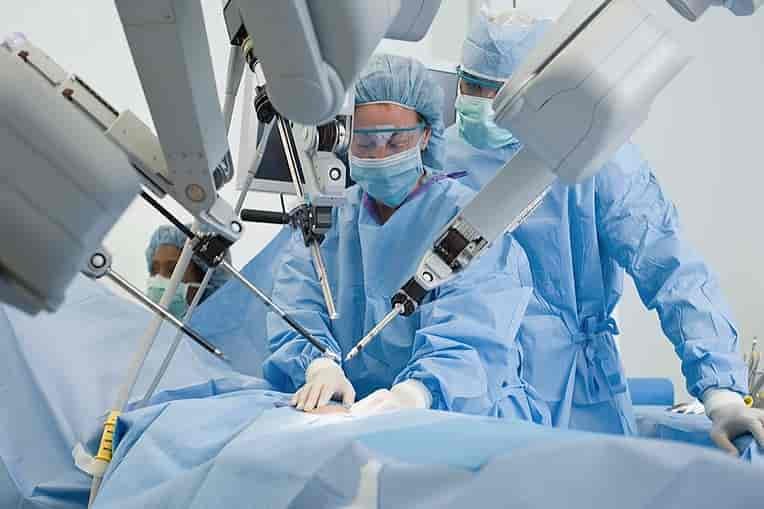
Robotic heart surgery is an advanced form of minimally invasive heart surgery in which a surgeon controls specialised robotic instruments from a console. The system provides a magnified, three-dimensional view of the surgical area and allows precise movements through small incisions.
It is used for selected heart conditions, but robotic surgery is not suitable for every patient or every type of heart operation. The decision depends on the heart condition, anatomy, overall health, and the expertise available at the hospital.
1. Main reasons to consider robotic heart surgery

1. Smaller incisions
Robotic techniques may allow surgery through small incisions between the ribs instead of a large incision through the breastbone (sternum). This can reduce surgical trauma in appropriately selected patients.

2. Enhanced visualisation and precision
The surgeon uses a magnified 3D view and instruments designed for fine movements. This can be beneficial for selected procedures requiring precise surgical work.

3. Potentially faster recovery
Some patients experience less postoperative discomfort, shorter hospital stays, and a quicker return to normal activities compared with conventional open surgery. The benefits depend on the procedure and the patient’s circumstances.

4. Smaller scars
Smaller incisions can produce less visible scarring and may avoid splitting the breastbone, depending on the operation.
2. Which heart conditions can be treated with robotic surgery?
Robotic techniques may be used for selected cases of:
- Mitral valve repair or replacement.
- Certain atrial septal defects (ASD).
- Selected ventricular septal defects (VSD), depending on the anatomy and the centre’s experience.
- Tricuspid valve surgery.
- Certain cardiac tumours.
- Selected coronary artery bypass procedures.
3. Is robotic heart surgery suitable for an infant with ASD and VSD?
This is particularly important in your case if you are asking about the infant discussed earlier.
Robotic heart surgery is not routinely used for infants with combined ASD and VSD. The instruments and working space can be unsuitable for a small chest, and published experience with robotic congenital heart surgery in infants remains limited.
The treating paediatric cardiac surgeon should compare these options:
| Surgical approach | Important consideration |
|---|---|
| Conventional open-heart surgery | Established approach for many complex congenital defects, including combined ASD and VSD. |
| Minimally invasive surgery | May be possible in selected cases, depending on the baby’s size and heart anatomy. |
| Robotic heart surgery | Requires specific expertise and suitable anatomy; rarely used for infant congenital heart repairs. |
| Catheter-based device closure | Suitable only for selected defects; not every ASD or VSD can be closed this way. |
The safest option is the one that offers the best repair for the individual baby—not necessarily the one using the newest technology.
4. Questions to ask the cardiac surgeon
- Is robotic surgery technically feasible for this baby’s age, weight and specific ASD/VSD anatomy?
- How many similar infant cases has the surgeon treated using this approach?
- Would conventional surgery provide a safer or more complete repair?
- What are the centre’s outcomes for infants with both defects, including mortality, complications and repeat procedures?
- What are the expected ICU stay, total cost and recovery time?
- If robotic surgery is attempted, what is the plan if conversion to open surgery becomes necessary?
For an infant, I would prioritise an experienced paediatric congenital heart surgeon and dedicated paediatric cardiac ICU, rather than choosing robotic surgery solely for smaller scars or potentially faster recovery.
For an infant aged 1–12 months with both ASD and VSD and a doctor already recommending surgery, I would prioritise a high-volume paediatric congenital heart surgery programme rather than choosing a hospital on general reputation alone.
My first two centres to contact for a surgical opinion would be Fortis Escorts Heart Institute, Okhla, and Indraprastha Apollo Hospitals, Jasola. I would also obtain a third opinion from Max Super Speciality Hospital, Saket or Artemis Hospital, Gurugram, particularly if the baby is very young or has other heart or lung complications. These hospitals have documented paediatric/congenital cardiac surgery services.
Because the baby is an infant, please arrange the consultation promptly. If the baby has difficulty breathing, blue or grey lips, poor feeding with sweating, unusual sleepiness, or fewer wet nappies, seek urgent medical care rather than waiting for a routine appointment.
1. Four hospitals and doctors I would shortlist

1. Dr. Krishna Subramony Iyer
Fortis Escorts Heart Institute
Why consider him: Chairman and Head of Paediatric and Congenital Heart Surgery. His specialist team is a suitable starting point for an infant needing assessment for ASD and VSD repair.
My view: One of the first centres I would contact for a surgical opinion.

2. Dr. Gaurav Kumar
Indraprastha Apollo Hospitals
Why consider him: Senior Consultant in Paediatric Cardiothoracic Surgery, with more than 25 years of experience listed on Apollo’s profile and specialist training in paediatric cardiac surgery.
My view: A strong option for a second opinion on the timing and surgical approach.

3. Dr. Kulbhushan Singh Dagar
Max Super Speciality Hospital
Why consider him: Chairman of Neonatal and Congenital Heart Surgery. His listed specialist interests include congenital heart defects in newborns and children.
Max Hospital
- Location: Saket, New Delhi.
My view: Particularly worth considering for a second opinion involving an infant.

4. Dr. Aseem R. Srivastava
Artemis Hospital
Why consider him: Chief of Paediatric Cardiac Surgery, with specialist training in congenital cardiac surgery at children’s hospitals in the United States. His listed procedures include ASD and VSD surgery, and his clinical experience includes complex neonatal and infant operations.
- Location: Sector 51, Gurugram.
My view: A convenient option for families in Gurugram and Faridabad who want an experienced congenital heart surgeon.
These are a specialist shortlist, not a verified ranking by surgical success rate. I cannot independently verify individual surgeons’ current outcomes or guarantee an outcome for your baby’s particular anatomy.