
Neurointerventional Surgery In India withMcure Health
- May 12, 2026
- 0 Likes
- 90 Views
- 0 Comments
Neurointerventional surgery in India has become one of the most advanced and trusted treatment options for patients suffering from complex brain and spine disorders. With cutting-edge technology, highly experienced neurosurgeons, and internationally accredited hospitals, India is now a preferred destination for patients seeking affordable yet world-class neurological care. Mcure Health is recognized as one of the leading medical tourism companies in India, helping international patients access top hospitals, expert neuro specialists, and complete medical travel assistance for neurointerventional procedures.
Neurointerventional surgery, also known as endovascular neurosurgery, is a minimally invasive procedure used to diagnose and treat diseases related to blood vessels of the brain, head, neck, and spine. Instead of open brain surgery, doctors use tiny catheters inserted through blood vessels to reach the affected area. This advanced approach reduces pain, minimizes complications, shortens recovery time, and improves treatment outcomes.
India has emerged as a global hub for neurointerventional treatments because patients can receive the same quality of care available in Western countries at a significantly lower cost. International patients from Africa, the Middle East, Asia, and Europe regularly travel to India for neurological procedures and rehabilitation services.
What Is Neurointerventional Surgery?
Neurointerventional surgery is a specialized branch of neurology and neurosurgery that uses image-guided techniques to treat disorders affecting the nervous system. The treatment is usually performed through small incisions using catheters and advanced imaging technology.
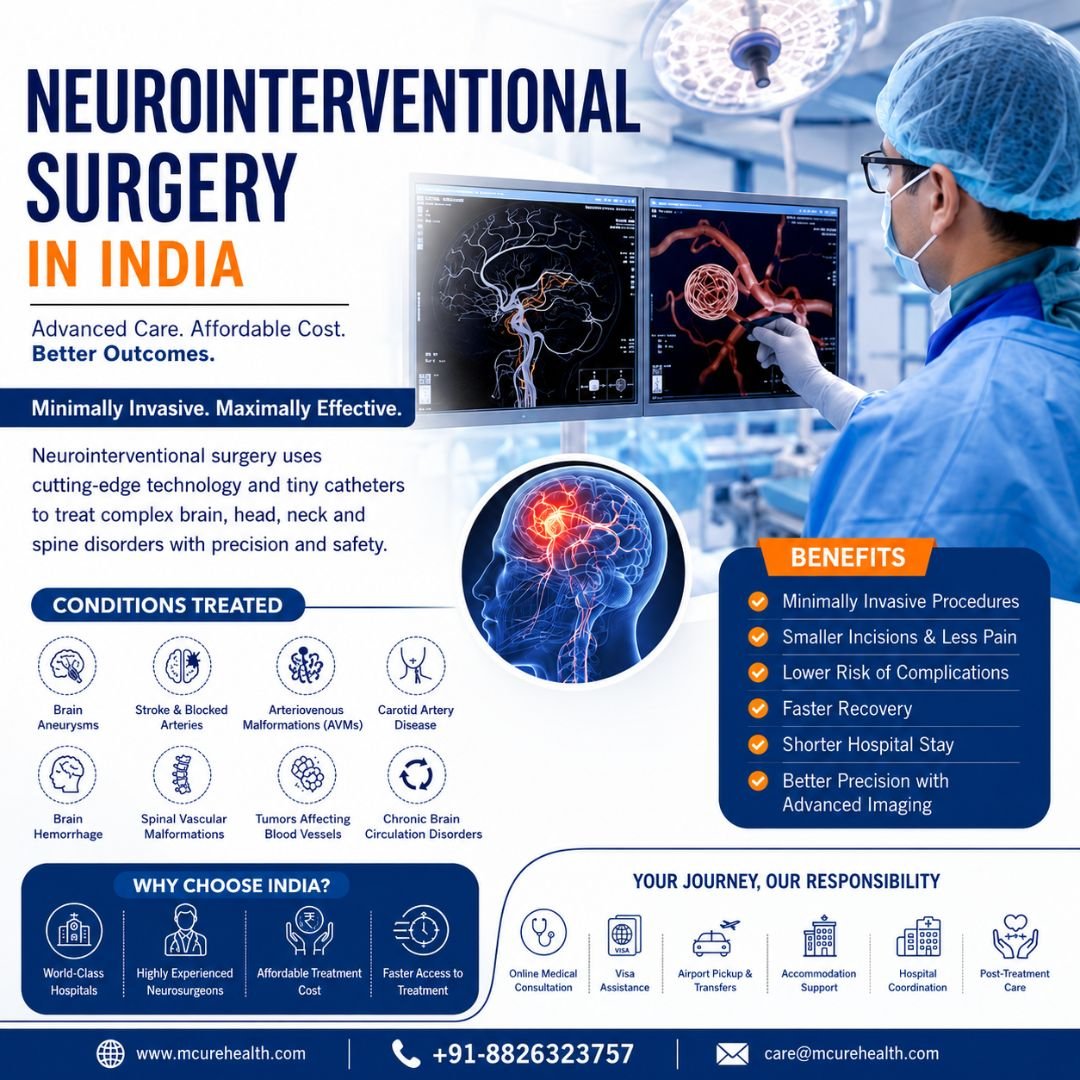
Common conditions treated through neurointerventional surgery include:
- Brain aneurysms
- Stroke and blocked brain arteries
- Arteriovenous malformations (AVMs)
- Carotid artery disease
- Brain hemorrhage
- Spinal vascular malformations
- Tumors affecting blood vessels
- Chronic brain circulation disorders
Unlike traditional open surgery, neurointerventional procedures are minimally invasive. Patients generally experience less blood loss, reduced hospital stays, faster healing, and fewer risks.
Why Choose Mcure Health India for Neurointerventional Surgery?
India has become a trusted destination for neurological treatments due to several important advantages.
Advanced Medical Technology
Top Indian hospitals are equipped with modern neuroimaging systems, biplane cath labs, robotic surgical support, and advanced intensive care units. These technologies allow doctors to perform highly precise procedures with excellent safety standards.
Experienced Neurosurgeons
India is home to internationally trained neurointerventional surgeons and neurologists who have extensive experience treating complex neurological conditions. Many specialists have trained in the United States, the United Kingdom, Germany, and other leading medical centers.
Affordable Treatment Cost
One of the biggest reasons patients choose India is affordability. Neurointerventional procedures in India can cost up to 60–80% less compared to countries such as the USA, UK, or Europe. Despite lower costs, hospitals maintain international standards of quality and patient care.
Faster Treatment Access
Patients often face long waiting periods in many countries for neurological procedures. In India, treatment can usually begin within a few days after diagnosis and consultation.
International Patient Support
Medical tourism companies such as Mcure Health Delhi provide complete assistance including medical visa support, doctor appointments, airport pickup, accommodation, language assistance, treatment coordination, and follow-up care.
Common Neurointerventional Procedures in India
Cerebral Angiography
This diagnostic procedure helps doctors examine blood vessels in the brain using contrast dye and imaging technology. It is commonly used to identify aneurysms, vascular malformations, and blocked arteries.
Aneurysm Coiling
Brain aneurysms can be life-threatening if they rupture. In aneurysm coiling, surgeons insert small platinum coils through a catheter to block blood flow to the aneurysm and prevent rupture.
Mechanical Thrombectomy
Mechanical thrombectomy is a life-saving procedure for acute stroke patients. Doctors remove blood clots from brain arteries using specialized devices, restoring blood flow and minimizing brain damage.
Carotid Artery Stenting
This treatment is used for patients with narrowed carotid arteries that may increase the risk of stroke. A stent is placed inside the artery to improve blood circulation.
AVM Embolization
Arteriovenous malformations are abnormal tangles of blood vessels in the brain or spine. Embolization blocks the abnormal blood flow and reduces the risk of bleeding.
Tumor Embolization
Doctors sometimes reduce blood supply to tumors before surgery to minimize bleeding and improve surgical outcomes.
Benefits of Neurointerventional Surgery
Neurointerventional surgery offers many advantages over traditional open surgery:
- Minimally invasive treatment
- Smaller incisions
- Lower infection risk
- Reduced pain and blood loss
- Faster recovery time
- Shorter hospital stay
- Better precision using advanced imaging
- Reduced complications
These benefits make neurointerventional procedures highly preferred for treating neurological conditions.
Role of Mcure Health in Medical Tourism
Medical travel can be stressful for international patients, especially when dealing with serious neurological conditions. Mcure simplifies the entire treatment journey by offering end-to-end medical tourism services in India.
The company connects patients with top neurologists, neurosurgeons, and internationally accredited hospitals across India. Their experienced team supports patients throughout the medical journey.
Services offered by Mcure include:
- Online medical consultation
- Cost estimation and treatment planning
- Medical visa assistance
- Airport transfers
- Accommodation arrangements
- Interpreter and language support
- Hospital coordination
- Follow-up and recovery support
It focuses on making healthcare affordable, accessible, and stress-free for international patients.
Recovery After Neurointerventional Surgery
Recovery depends on the patient’s condition and the type of procedure performed. Most patients recover faster compared to open surgery. Some procedures may require only a short hospital stay of 1–3 days.
Doctors usually recommend:
- Regular follow-up visits
- Medications to prevent clotting
- Physiotherapy if needed
- Healthy diet and lifestyle changes
- Stroke rehabilitation programs
India also offers advanced rehabilitation services that help patients regain mobility and improve neurological function after treatment.
Why International Patients Trust India
India has become one of the leading medical tourism destinations because of its combination of affordability, expertise, and compassionate care. Medical tourism facilitators play a major role in helping patients find the right hospitals and specialists for neurological treatment.
Patients from many countries trust Indian hospitals for advanced neuro and spine procedures because of high success rates, modern technology, and experienced doctors.
Conclusion
Neurointerventional surgery in India offers hope and advanced treatment options for patients suffering from serious neurological disorders. With minimally invasive techniques, highly experienced specialists, modern hospitals, and affordable treatment costs, India has become a preferred destination for neurovascular care.
Mcure Healthcare in India stands out as one of the best medical tourism companies in India, helping international patients receive safe, affordable, and high-quality neurological treatment with complete travel and medical support. From initial consultation to recovery, Mcure ensures a smooth and comfortable healthcare journey for every patient seeking neurointerventional surgery in India.