
Brain Tumor Treatment Options: A Complete Guide to Diagnosis, Surgery, Radiation & Advanced Care
- September 9, 2026
- 0 Likes
- 62 Views
- 0 Comments
A brain tumor diagnosis can be overwhelming for patients and their families. However, advances in neurosurgery, radiation oncology, medical oncology, imaging, and personalized medicine have significantly expanded the available brain tumor treatment options. The most appropriate treatment depends on several factors, including the type of tumor, its size and location, whether it is benign or malignant, its growth rate, molecular characteristics, and the patient’s overall health.
At Mcure Health, patients can receive guidance for accessing experienced specialists and advanced hospitals in India. Treatment is planned according to the individual diagnosis rather than using a one-size-fits-all approach.
What Is a Brain Tumor?
A brain tumor occurs when abnormal cells grow within or around the brain. Brain tumors can be benign (non-cancerous) or malignant (cancerous). Some tumors grow slowly, while others can be aggressive and require urgent treatment.
Brain tumors may cause symptoms by pressing on nearby brain tissue or affecting normal neurological functions. Common symptoms can include persistent headaches, seizures, vision or speech changes, weakness or numbness, balance problems, memory difficulties, nausea, or changes in personality.
Because these symptoms can have many possible causes, proper medical evaluation is essential.
How Is a Brain Tumor Diagnosed?
Before deciding on treatment, doctors need to understand exactly what type of tumor is present and where it is located.
Diagnostic evaluation may include:
- MRI of the brain to obtain detailed images of the tumor
- CT scans in selected situations
- Neurological examinations
- Blood tests when clinically appropriate
- Biopsy or tissue examination when required
- Molecular and genetic testing for certain tumors
The results help the medical team determine the tumor’s characteristics and develop an appropriate treatment strategy.
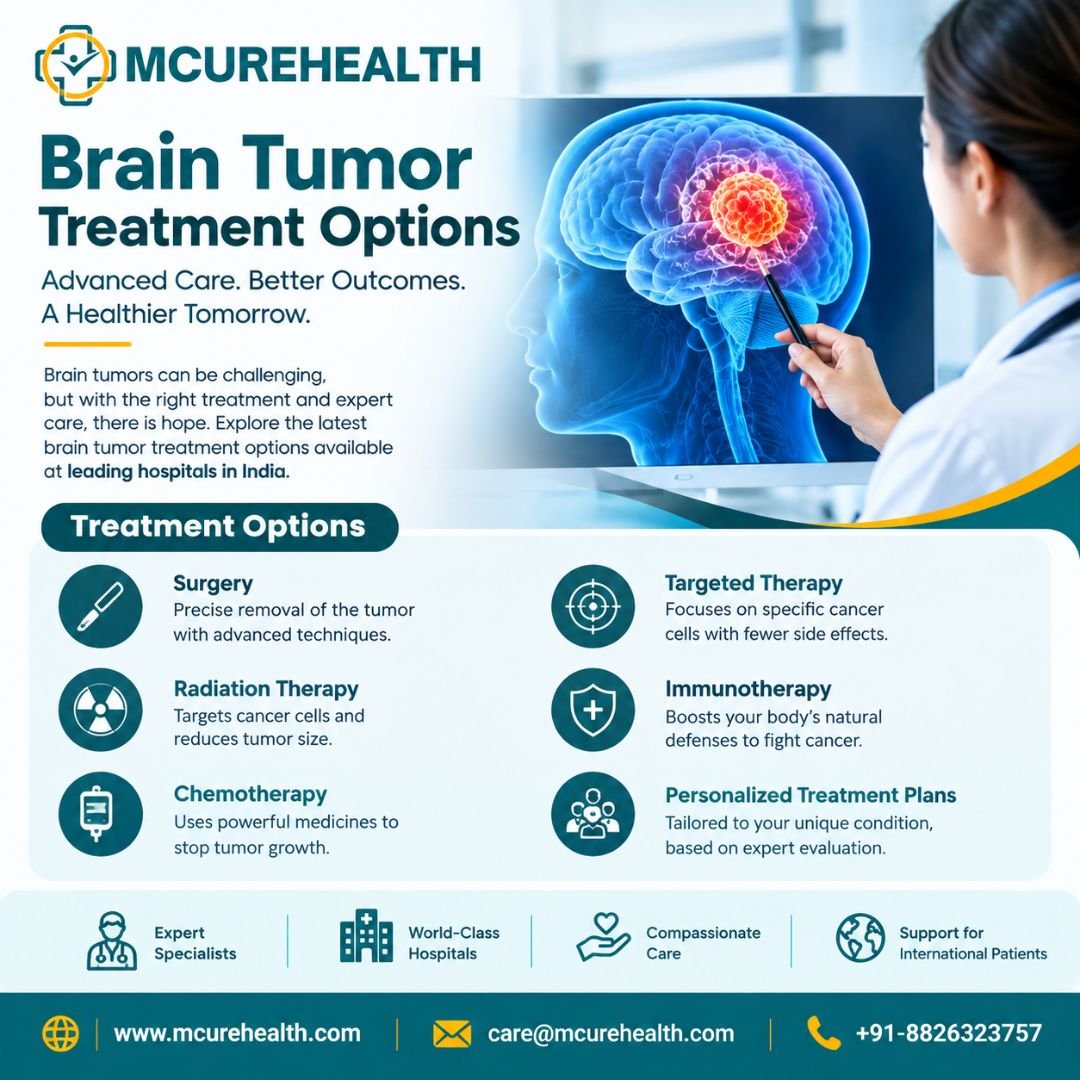
1. Brain Tumor Surgery
Surgery is an important treatment option for many brain tumors. The goal may be to remove as much of the tumor as safely possible, obtain tissue for diagnosis, relieve pressure, or improve symptoms.
The type of surgery depends heavily on the tumor’s location and relationship to important areas of the brain.
Modern neurosurgical techniques may include image-guided surgery and other technologies designed to help surgeons identify and protect critical brain structures.
In some cases, complete removal may be possible. In others, removing only part of the tumor may be safer because of its location.
The decision should always be made by an experienced neurosurgical team after reviewing the patient’s imaging and diagnosis.
2. Radiation Therapy
Radiation therapy uses carefully planned radiation to target tumor cells. It may be recommended after surgery, instead of surgery in selected cases, or as part of treatment for tumors that cannot be completely removed.
Depending on the diagnosis, doctors may consider advanced radiation techniques designed to deliver radiation accurately to the treatment area while limiting exposure to surrounding healthy tissue.
Radiation treatment can be particularly important for certain malignant brain tumors and for tumors that remain after surgery.
The exact radiation approach and number of sessions depend on the tumor type, size, location, previous treatments, and overall treatment plan.
3. Chemotherapy
Chemotherapy involves medicines that help control or destroy cancer cells. It may be used for specific types of brain tumors and can sometimes be combined with surgery and radiation therapy.
Not every brain tumor requires chemotherapy. The choice depends on the tumor’s pathology and molecular characteristics, as well as other clinical factors.
Doctors carefully evaluate the potential benefits and side effects before recommending chemotherapy.
Patients should discuss the expected treatment schedule, possible side effects, monitoring requirements, and alternatives with their oncology team.
4. Targeted Therapy
Advances in cancer research have led to treatments designed to target specific biological characteristics of certain tumors.
Targeted therapy may be considered when testing identifies particular molecular changes that can potentially be treated with a targeted medicine.
This is one reason why detailed tumor testing can be important for selected patients. Targeted treatment is not appropriate for every brain tumor, but when a suitable molecular target is identified, it may become an important part of an individualized treatment plan.
5. Immunotherapy
Immunotherapy works by helping the immune system recognize or respond to cancer. It has transformed treatment for several types of cancer, although its role in brain tumors varies depending on the tumor type and individual circumstances.
Researchers continue to study different immunotherapy approaches for brain tumors. In selected cases, doctors may consider immunotherapy or clinical trials when appropriate.
Patients should not assume that immunotherapy is suitable for every brain tumor. A specialist should review the diagnosis and available evidence before recommending it.
6. Personalized Brain Tumor Treatment Plans
One of the most important developments in modern cancer care is personalized treatment.
Two patients with brain tumors may have very different treatment plans because their tumors can differ in type, location, grade, molecular profile, and response to treatment.
A personalized plan may combine:
- Surgery
- Radiation therapy
- Chemotherapy
- Targeted medicines
- Immunotherapy in selected cases
- Rehabilitation and supportive care
- Regular imaging and follow-up
A multidisciplinary team may include neurosurgeons, neurologists, radiation oncologists, medical oncologists, radiologists, pathologists, rehabilitation specialists, and other healthcare professionals.
Why Choosing the Right Medical Team Matters
Brain tumor treatment requires specialized expertise because the brain controls many essential functions. Treatment decisions often involve balancing tumor control with preservation of neurological function.
When evaluating treatment options, patients may want to consider:
- Experience of the neurosurgical and oncology team
- Availability of advanced diagnostic imaging
- Access to modern surgical techniques
- Radiation therapy capabilities
- Pathology and molecular testing
- Multidisciplinary treatment planning
- Rehabilitation and follow-up services
- Support for patients travelling from another city or country
For international patients, healthcare coordination can also include assistance with appointments, hospital coordination, travel planning, accommodation, and communication with medical teams.
Recovery and Follow-Up After Brain Tumor Treatment
Recovery varies considerably from one patient to another. Some people may return to normal activities relatively quickly, while others require longer rehabilitation.
Depending on the patient’s condition, rehabilitation may include:
- Physiotherapy
- Occupational therapy
- Speech and language therapy
- Cognitive rehabilitation
- Psychological support
- Nutritional guidance
Regular follow-up is also important. Doctors may recommend periodic MRI scans or other assessments to monitor treatment response and detect changes early.
Brain Tumor Treatment in India
India has developed advanced healthcare facilities offering neurosurgery, oncology, radiation therapy, diagnostic imaging, and multidisciplinary cancer care. For patients seeking treatment in India, selecting a hospital and specialist based on the specific tumor diagnosis is important.
Mcure Health helps patients explore medical treatment options and connect with appropriate specialists and hospitals in India. Each case should be evaluated individually, and treatment recommendations should come from qualified medical professionals after reviewing the patient’s medical records and investigations.
Conclusion
A brain tumor diagnosis does not mean that there is only one treatment pathway. Depending on the diagnosis, patients may have access to surgery, radiation therapy, chemotherapy, targeted therapy, immunotherapy in selected situations, and personalized multidisciplinary care.
The right treatment depends on the tumor’s type, location, grade, molecular characteristics, symptoms, and the patient’s overall health. Getting an expert medical opinion can help patients understand their diagnosis and make informed decisions about the next steps.
Mcure Health is committed to helping patients access expert medical guidance, advanced hospitals, and personalized healthcare support in India.
Talk to Mcure Health
🌐 Website: www.mcurehealth.com
📧 Email: care@mcurehealth.com
📞 Phone: +91-8826323757