

Heart Bypass Surgery Explained: Procedure, Benefits, Recovery & What Patients Should Know
- September 15, 2026
- 0 Likes
- 5 Views
- 0 Comments
Heart disease is one of the leading health concerns worldwide, and blocked or narrowed coronary arteries can significantly affect the heart’s ability to receive enough oxygen-rich blood. When coronary arteries become severely narrowed because of plaque buildup, patients may experience chest pain, shortness of breath, fatigue, or an increased risk of a heart attack. In such cases, heart bypass surgery, medically known as Coronary Artery Bypass Grafting (CABG), may be recommended.
Heart bypass surgery is an established cardiac procedure designed to improve blood circulation to the heart muscle. It creates a new pathway for blood to flow around blocked or narrowed arteries, helping the heart receive an adequate supply of oxygen.
What Is Heart Bypass Surgery?
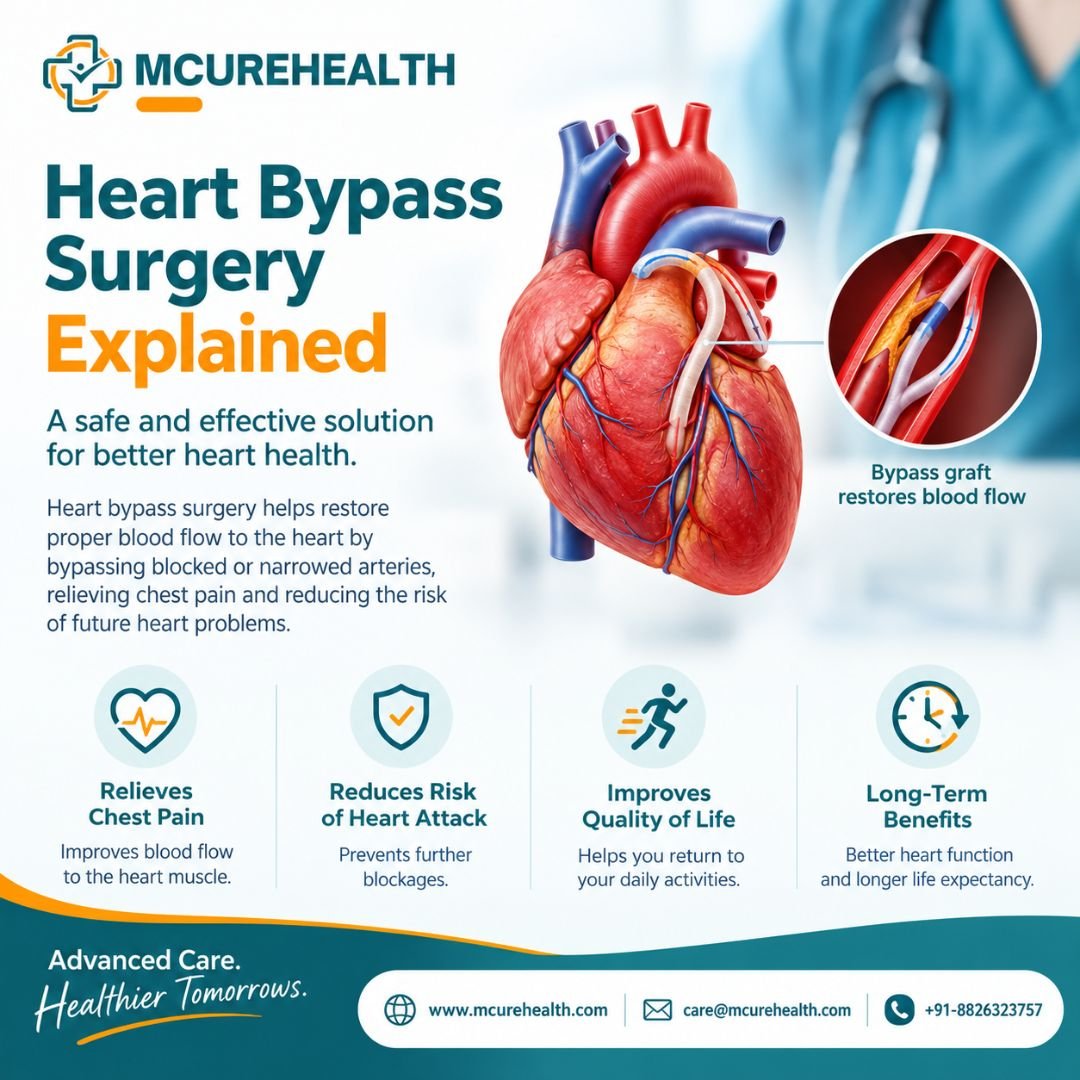
Heart bypass surgery is a surgical treatment for coronary artery disease (CAD). During the procedure, a healthy blood vessel from another part of the patient’s body—often the chest, arm, or leg—is used as a graft.
The surgeon connects this graft above and below the blocked section of the coronary artery. This creates an alternative route, or “bypass,” allowing blood to flow around the blockage and reach the heart muscle.
Depending on the number and location of blocked arteries, a patient may require:
- Single bypass
- Double bypass
- Triple bypass
- Quadruple bypass
The appropriate procedure depends on the individual patient’s condition, medical history, artery blockages, and overall heart health.
Why Is Heart Bypass Surgery Needed?
Coronary arteries supply oxygen and nutrients to the heart muscle. Over time, cholesterol, fat, calcium, and other substances can accumulate inside these arteries, causing them to become narrowed or blocked. This condition is commonly associated with coronary artery disease.
When blood flow is reduced, patients may develop angina, or chest pain, particularly during physical activity. Severe blockages can also increase the risk of a heart attack.
Doctors may recommend bypass surgery when coronary artery disease is extensive or when other treatments may not provide sufficient improvement.
The decision may depend on factors such as:
- The number of blocked arteries
- Severity and location of blockages
- Symptoms such as chest pain or breathlessness
- Heart function
- Response to medication or other treatments
- Overall health and medical history
How Does Heart Bypass Surgery Work?
The main objective of bypass surgery is to restore blood flow to areas of the heart that are not receiving enough oxygen.
During CABG, the surgeon uses a healthy blood vessel as a graft. The graft is connected in such a way that blood can travel around the blocked portion of the coronary artery.
The new pathway can help improve circulation to the heart muscle. By restoring blood flow, bypass surgery may help reduce symptoms such as chest pain and improve a patient’s ability to perform daily activities.
The exact surgical approach varies from patient to patient. In some cases, traditional open-heart surgery may be performed, while selected patients may be candidates for less invasive approaches.
What Are the Benefits of Heart Bypass Surgery?
Heart bypass surgery can provide important benefits for appropriately selected patients. The results depend on the patient’s overall condition and the severity of coronary artery disease.
1. Relieves Chest Pain
Improved blood flow to the heart muscle can help reduce angina and other symptoms caused by inadequate blood supply.
2. Improves Blood Flow
The bypass graft creates an alternative route for blood to reach the heart muscle beyond the blocked or narrowed artery.
3. May Reduce the Risk of Heart Attack
For certain patients with significant coronary artery disease, bypass surgery can reduce the risk associated with severe blockages. However, individual outcomes depend on several medical factors.
4. Improves Quality of Life
When symptoms are controlled and heart function is appropriately managed, many patients can gradually return to normal daily activities and enjoy an improved quality of life.
5. Long-Term Heart Health
Surgery addresses existing blood-flow problems, but maintaining heart health after surgery remains essential. Healthy lifestyle choices, prescribed medications, regular follow-ups, and management of risk factors can support long-term cardiovascular health.
What Happens Before Heart Bypass Surgery?
Before CABG, the cardiac team performs a detailed evaluation to understand the patient’s heart condition and determine whether surgery is appropriate.
Depending on the case, evaluation may include:
- Physical examination
- Blood tests
- Electrocardiogram (ECG)
- Echocardiogram
- Stress testing
- Coronary angiography
- Chest imaging
- Other tests recommended by the cardiac team
The medical team also reviews existing medications, allergies, previous surgeries, diabetes, blood pressure, cholesterol levels, and other relevant health conditions.
Patients should provide their doctors with complete information about their medical history and medications before surgery.
What Happens During the Procedure?
The surgical process depends on the patient’s condition and the type of CABG being performed.
In traditional bypass surgery, the patient is placed under general anesthesia. The surgeon accesses the heart and obtains a suitable blood vessel to use as a graft. The graft is then connected to create a new pathway around the blocked coronary artery.
In many traditional procedures, a heart-lung machine may temporarily take over the functions of the heart and lungs while the surgeon performs the bypass. In selected cases, off-pump coronary artery bypass surgery may be considered.
The surgical team carefully monitors the patient throughout the procedure.
Recovery After Heart Bypass Surgery
Recovery from bypass surgery takes time and varies from person to person. Patients usually spend time in the hospital for close monitoring before returning home.
During the early recovery period, patients may experience tiredness, discomfort around the surgical area, or reduced energy. These symptoms generally improve gradually.
The healthcare team provides instructions regarding:
- Wound care
- Medications
- Physical activity
- Diet
- Follow-up appointments
- Cardiac rehabilitation
- Warning signs that require medical attention
A structured cardiac rehabilitation program may be recommended to help patients safely improve strength, fitness, and cardiovascular health.
Lifestyle After Bypass Surgery
Heart bypass surgery improves blood flow, but it does not completely eliminate the underlying causes of coronary artery disease. Long-term heart care is therefore extremely important.
Patients may be advised to:
- Follow a heart-healthy diet
- Maintain a healthy weight
- Stay physically active as recommended
- Avoid smoking and tobacco
- Control blood pressure
- Manage cholesterol
- Manage diabetes when applicable
- Take prescribed medicines regularly
- Attend routine cardiac check-ups
These measures can support cardiovascular health and help reduce the risk of future heart problems.
Choosing the Right Cardiac Care
Heart bypass surgery is a major procedure and should be planned after a detailed evaluation by qualified cardiac specialists. Patients should discuss the expected benefits, possible risks, alternatives, recovery period, and long-term care plan with their healthcare team.
For patients seeking cardiac treatment in India, Mcure Health assists patients in connecting with appropriate healthcare services and experienced medical professionals. The medical team can help patients understand their treatment options and plan their healthcare journey based on their individual needs.
Conclusion
Heart bypass surgery, or CABG, is an important treatment option for selected patients with severe coronary artery disease. By creating a new pathway around blocked or narrowed arteries, the procedure can improve blood flow to the heart and may help relieve chest pain, improve daily functioning, and support better quality of life.
Successful recovery does not end with surgery. Regular medical follow-ups, prescribed treatment, cardiac rehabilitation, a healthy diet, physical activity, and control of cardiovascular risk factors are essential parts of long-term heart care.
If you or a family member has been diagnosed with significant coronary artery disease, consult a qualified cardiac specialist to determine whether bypass surgery or another treatment approach is appropriate.
Mcure Health – Advanced Care. Healthier Tomorrows.