

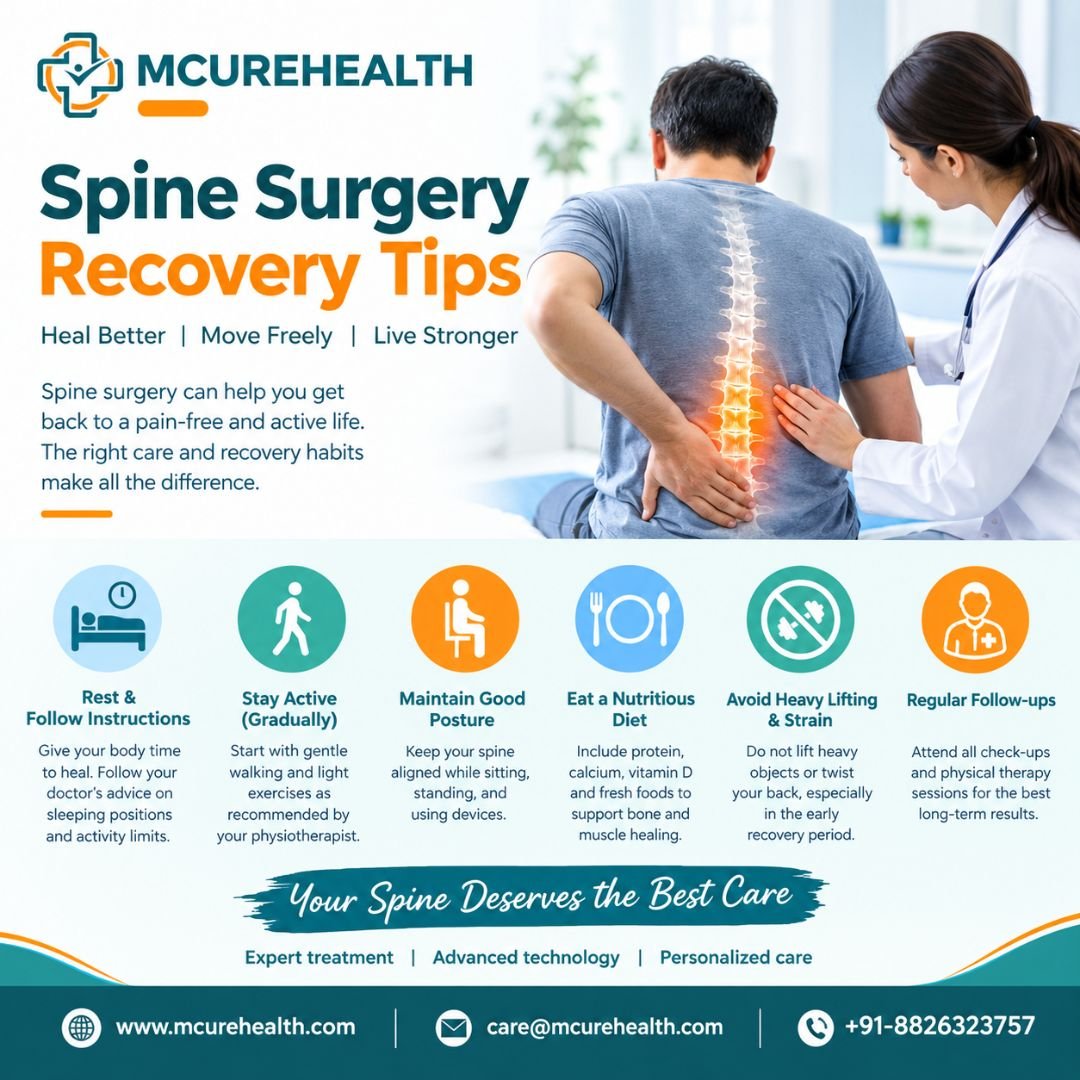
Spine Surgery Recovery Tips: A Complete Guide to Healing Better and Moving Freely
- September 8, 2026
- 0 Likes
- 51 Views
- 0 Comments
Spine surgery can be an important step toward reducing persistent pain, improving mobility, and returning to a more active life. However, surgery is only one part of the recovery journey. What you do after the procedure—including rest, physical activity, nutrition, posture, and follow-up care—can have a major impact on your healing and overall outcome.
A well-planned recovery allows the body to heal while gradually rebuilding strength and confidence. Every patient recovers at a different pace, depending on the type of spine surgery, overall health, age, and individual circumstances. Therefore, your surgeon’s instructions should always take priority.
At Mcure Health, we believe that informed patients are better prepared for their recovery. Here are some important spine surgery recovery tips to help support a safe and progressive healing journey.
1. Rest and Follow Your Doctor’s Instructions
Rest is an essential part of recovery after spine surgery. Your body needs adequate time and energy to repair tissues and adjust after the procedure. However, rest does not necessarily mean staying in bed all day.
Follow the sleeping positions, activity restrictions, medication instructions, and wound-care recommendations provided by your healthcare team. Avoid returning to your normal routine too quickly, even if you start feeling better.
Depending on your procedure, your doctor may recommend specific positions for sleeping or sitting. Using appropriate pillows or other support may help you maintain a comfortable spinal position.
Remember that recovery is a gradual process. Listen to your body and contact your healthcare provider if you experience unexpected or worsening symptoms.
2. Stay Active Gradually
Although sufficient rest is important, prolonged inactivity can contribute to stiffness, muscle weakness, and reduced mobility. Once your doctor allows activity, gentle movement can become an important part of recovery.
Walking is often introduced gradually after spine surgery. Begin with short walks and increase the duration according to your healthcare team’s recommendations. Physical therapy may also include carefully selected exercises designed to improve flexibility, strength, balance, and movement.
Do not attempt strenuous workouts, running, bending exercises, or heavy physical activity without medical approval. Your physiotherapist can create a rehabilitation program based on your surgery and individual needs.
The goal is not to do as much as possible—it is to progress safely and consistently.
3. Maintain Good Posture
Good posture can help reduce unnecessary stress on your spine during recovery. Pay attention to how you sit, stand, walk, and use electronic devices.
When sitting, try to keep your back supported and avoid slouching for long periods. When standing, maintain a comfortable, natural alignment rather than leaning excessively forward or backward.
Your healthcare team may recommend specific sitting positions or supportive equipment depending on your surgery.
Posture is particularly important when using laptops, mobile phones, or other devices. Keeping screens at an appropriate height can help prevent prolonged bending of the neck and upper back.
Small adjustments to everyday habits can make movement more comfortable as you recover.
4. Eat a Nutritious Diet
Nutrition plays an important supporting role in the body’s healing process. After surgery, your body requires nutrients to repair tissues, maintain muscle, and support overall recovery.
Include a balanced diet containing adequate protein, calcium, vitamin D, fruits, vegetables, whole grains, and healthy fats, unless your doctor has advised specific dietary restrictions.
Protein-rich foods can support tissue and muscle repair, while calcium and vitamin D are important for maintaining healthy bones. Fresh fruits and vegetables can provide vitamins, minerals, and fiber that support general health.
Stay adequately hydrated unless you have been instructed to restrict fluids.
If you have diabetes, kidney disease, digestive problems, or other conditions that require a special diet, discuss your nutritional needs with your doctor or a qualified dietitian.
5. Avoid Heavy Lifting and Strain
One of the most important precautions after spine surgery is avoiding unnecessary strain on your back. Heavy lifting, sudden twisting, repetitive bending, or strenuous household activities may interfere with recovery.
Do not lift heavy objects unless your surgeon has specifically cleared you to do so. When you eventually return to lifting activities, your physiotherapist can teach you safer movement and lifting techniques.
Be particularly careful during the early recovery period. Everyday tasks such as moving furniture, carrying heavy shopping bags, or repeatedly bending to clean can place stress on the healing spine.
Gradually returning to physical activities under professional guidance is generally safer than trying to resume everything immediately.
6. Attend Regular Follow-Ups
Follow-up appointments are an important part of spine surgery recovery. Your surgeon can evaluate your progress, monitor healing, review symptoms, and determine when it is appropriate to increase your activity level.
Physical therapy sessions may also be recommended to help restore strength, flexibility, coordination, and functional movement.
Do not skip appointments simply because you feel better. Some aspects of recovery need professional assessment even when symptoms have improved.
During follow-ups, tell your healthcare provider about any persistent pain, weakness, numbness, changes in mobility, or other concerns.
7. Take Medications as Prescribed
After surgery, your doctor may prescribe medications to manage pain, inflammation, or other postoperative needs. Take medicines exactly as instructed.
Do not change the dose, stop a prescribed medication suddenly, or add over-the-counter medicines or supplements without discussing them with your healthcare provider.
If a medication causes concerning side effects or does not appear to control your symptoms adequately, contact your medical team rather than adjusting the treatment yourself.
8. Pay Attention to Warning Signs
Some discomfort can be expected during recovery, but certain symptoms require prompt medical attention. Contact your healthcare provider if you experience symptoms that are severe, unexpected, worsening, or different from what you were told to expect.
Depending on the procedure, warning signs may include increasing weakness or numbness, significant changes in bladder or bowel control, fever, unusual wound drainage, severe or rapidly increasing pain, or other concerning symptoms.
If symptoms are sudden or severe, seek urgent medical care.
9. Be Patient With Your Recovery
One of the biggest challenges after spine surgery is expecting recovery to happen immediately. Healing takes time, and progress may not always be linear.
You may have days when you feel stronger and other days when you experience more fatigue or discomfort. This does not necessarily mean that your recovery is going backward.
Set realistic goals and celebrate gradual improvements—such as walking farther, performing daily activities more comfortably, or becoming more independent.
Following your rehabilitation plan consistently is usually more valuable than trying to achieve rapid results.
10. Focus on Long-Term Spine Health
Recovery should not end when your surgical wound heals. Long-term spine health also depends on maintaining healthy habits.
Once cleared by your healthcare provider, regular physical activity, appropriate strengthening exercises, maintaining a healthy weight, practicing good posture, and using safe lifting techniques can help support your overall musculoskeletal health.
If your work involves prolonged sitting or physical labor, discuss ergonomic adjustments with your healthcare team.
Conclusion
Spine surgery recovery is a journey that requires patience, proper care, gradual movement, good nutrition, and regular medical supervision. Rest when your body needs it, become active gradually, protect your spine from unnecessary strain, maintain good posture, and attend all recommended follow-up and physiotherapy sessions.
Most importantly, remember that every recovery plan is individual. The type of surgery and your personal health determine what activities are appropriate and when you can safely return to them.
Heal Better. Move Freely. Live Stronger. With the right guidance and consistent care, you can take meaningful steps toward a stronger and more active future.
Mcure Health is committed to helping patients access expert healthcare, advanced treatment options, and personalized medical support. For spine surgery or other specialized healthcare needs, consult qualified medical professionals to understand the treatment and recovery plan best suited to you.